You've been there. Day one: you're in. You've got a plan, maybe a friend or a group, and it feels good. By day seven you're still going. By day fourteen? Radio silence. The challenge isn't bad—you're not lazy. So why does it keep happening?
Turns out, most challenges are set up to fail. Not on purpose. But the way they're designed—too big, too vague, too lonely—works against how we actually stick to things. The good news? Once you know why we quit, you can design (or choose) challenges you'll actually finish. And that changes everything.
Why We Quit: The Usual Suspects
1. Too Big, Too Soon
"Run a marathon." "30 days of 45-minute workouts." "No sugar for a month." Big goals are inspiring—until day three, when they feel impossible. We're not wired to sustain huge leaps. We're wired for small wins that add up.
When a challenge asks for more than you can comfortably do on a bad day, you're one rough week away from dropping out. The fix isn't to dream smaller. It's to break the dream into steps and make the first step something you'd never skip.

2. Too Vague
"Do more exercise." "Get fit." "Be consistent." What does that mean, today? If you can't point to a clear yes/no—Did I do the thing?—you're not in a challenge. You're in a wish. Vague challenges have no finish line, so there's nothing to cross and no moment of "I did it."
The best challenges have a single, specific action you can do (or not do) every day. Count it. Check it off. No gray area.

3. No Feedback (Or It Comes Too Late)
We need to know we're making progress. If the only "reward" is at the end of 30 days, most of us lose steam. Small, frequent feedback—a streak, a checkmark, a friend saying "nice"—keeps the engine running. Challenges that only look at the final result leave us running in the dark. We need to see the path under our feet.
4. Going It Alone
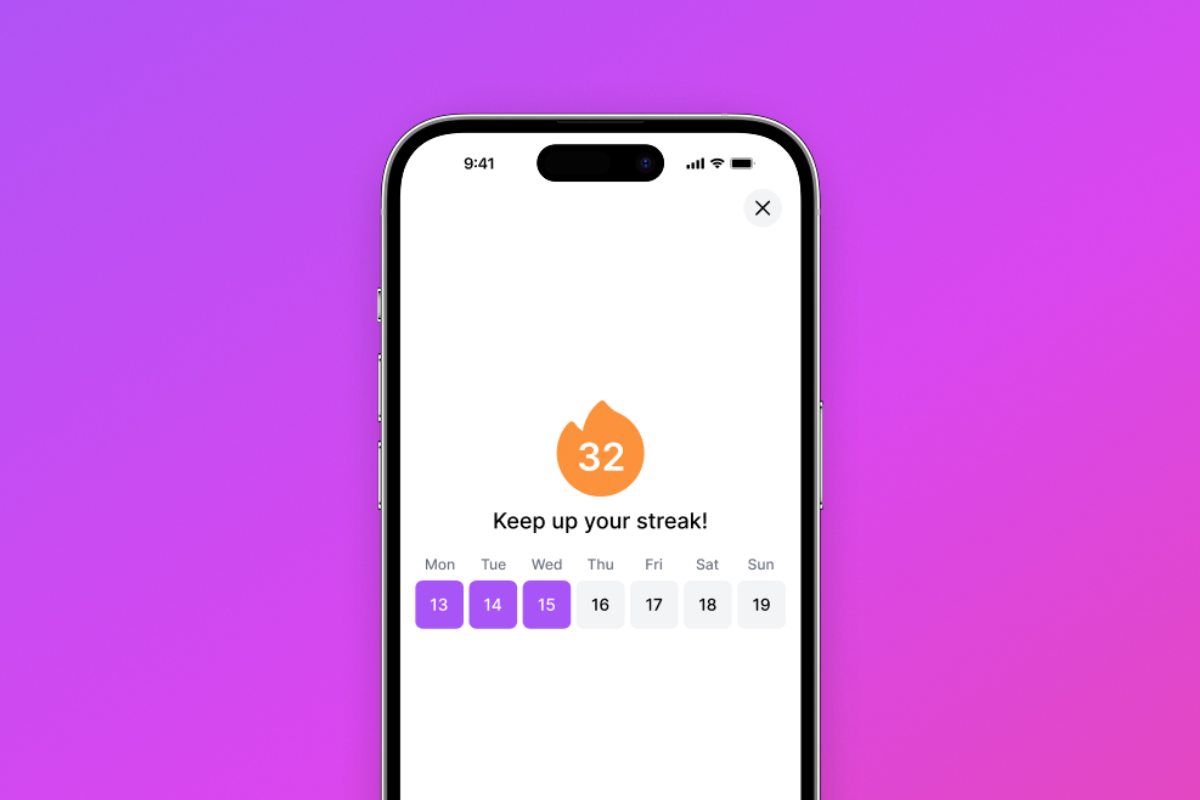
Willpower is a limited resource. When you're the only one holding yourself accountable, one bad day can break the chain. When someone else is in the loop—a friend, a group, an app that shows you're not the only one showing up—skipping feels different. Not because you're being judged, but because you're part of something. We stick better when we're not the only one watching.

5. No Room for Life
Rigid rules ("every day, no exceptions") look strong on paper. In real life, stuff happens. You get sick. You travel. You have a week from hell. If the challenge has no flexibility—no "make up" or "skip once" or "adjust the goal"—one slip can feel like total failure. And when we feel we've already failed, we often stop trying. Good challenges build in a little slack so a bad day doesn't blow up the whole thing.

How to Design (or Pick) a Challenge You'll Actually Finish
Use this as a simple checklist. The more boxes you tick, the better your odds.
Make it specific. One clear action. "Walk 10 minutes after lunch." "Do 20 push-ups before shower." "Log one workout in the app." Not "exercise more."
Make it small enough for a bad day. Could you do the minimum on your busiest, tiredest day? If not, shrink the daily ask. You can always do more on good days.
Add feedback. Streaks, checkmarks, a friend who sees your progress, or an app that shows "you've done this 12 days in a row." Something that says "you're moving" before the final day.
Add someone else. A buddy, a group, or a challenge where others are in it with you. Accountability isn't about shame—it's about not being the only one who cares.
Build in flexibility. One rest day. One "make up" per week. Or a rule like "hit the goal 5 out of 7 days." So one miss doesn't mean "I failed."
Pick a clear end. 7 days, 21 days, 30 days—whatever fits. A real finish line gives you something to cross and a moment to celebrate before you decide what's next.
Start With One Challenge, Done Right
You don't need to fix every challenge you've ever quit. You just need to run one that's designed to be finishable. Pick something from the list above—specific, small, with feedback and a friend if you can—and commit to that. See how it feels to actually cross the line. Then use the same principles for the next one.
Finishing feels different than "trying again." It builds proof that you can do this. So design for the finish. You've got this.
Want a challenge that's built for finishing? Challenge a friend on Challengeer—set the rules together, keep each other accountable, and cross the line as a team.